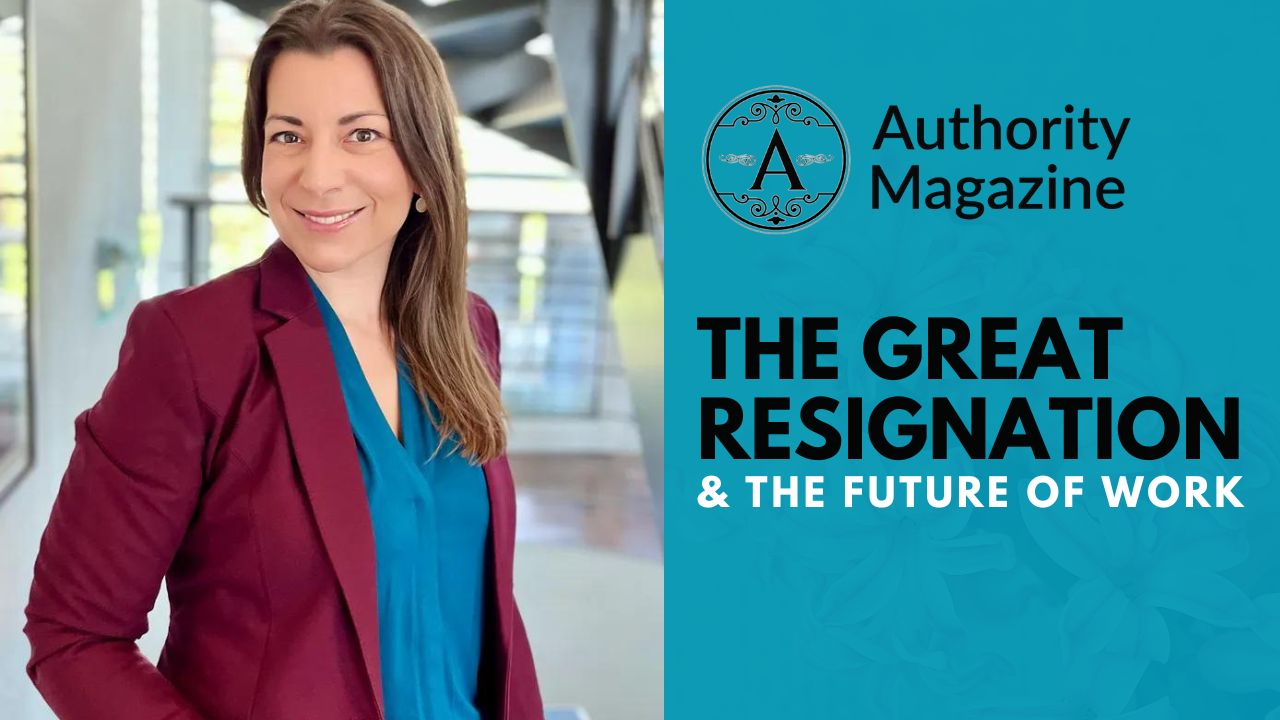
I was interviewed by Karen Mangia for Medium’s Authority Magazin on the Future of Work. Really enjoyed talking about trends and the power of empathy (of course, as usually, all views are my own).
Check it out and let me know if you agree/ disagree 😊
“One day you will wake up and there won’t be any more time to do the things you’ve always wanted. Do it now.” (Paulo Coelho)
When I was 17, just a few weeks before my final high school exams, I had an accident playing soccer. Somehow my boot got stuck in the soft mud, and I twisted my knee. I tore my ACL, damaged my meniscus and a few other ligaments in my knee. From one day to the other, I went from being sporty and active to walking on crutches.
To me, this was a wake-up call – which echoed through many decisions I made later in my life & career. Life is short and can change any instance, so make sure you make time for what is important for you now rather then wait for “later”. Because “later” might never come.
I was lucky. My “later” came. There are some things I cannot (or should not) do anymore, but overall, I really consider myself lucky, having made a pretty good recovery.
But as I said, the lesson stuck and was, for example a driver for me starting over during my Ph.D.: I had gone straight from my physics master’s degree into a physics Ph.D. and was working in quantum optics. We tried to understand the fundamental mechanisms of interaction between light and matter. But after a year, I realized my heart was not into it. I liked the structured, analytical way of working, but I wanted to work on something with more real-world impact. It was initially a tough decision, facing the prospect of putting all those years I had spent in physics behind me. But then I remembered the lesson from my soccer accident. The key realization was that even if I finished the physics Ph.D., I would be looking to do something else afterward. So why wait? And this is how I ended up getting a Ph.D. studying organizational design and development of healthcare services.
What are the things you want to do? What makes you wait or consider waiting?
In line with my last post about committed decisions showing up either in your calendar or your bank account – interesting isn’t it that our formal education system isn’t terribly good in teaching either?
I found the quote from Carole Hildebrand (featured in James Clear’s newsletter) thought-provoking.
And I indeed took a look at my calendar for the last year. What I found: I made space for things I value (for example, rowing regularly). But there are also so many things in there where I should and could have said “no” to but did not – for various reasons.
With my bank account, on the other hand, there are things I wished I would have said (even) more “yes” to – like dinners with friends, going to see a show with my man, or pampering myself a bit more.
What do your calendar and your bank account say about you? Do they reflect the person you want to be?
==============Full quote by Carole=============
“Most of us have weak decision-making muscles. We do not realize what it means to make a real decision. We fail to recognize the force of change that a truly congruent, committed decision makes.
The word “decision” comes from Latin roots, with de meaning “dotool wn” or “away from” and caedere meaning “to cut.” Therefore, a decision means cutting from any other possibility. A true decision means you are committed to achieving a result and cutting yourself off from any other possibility.
Committed decisions show up in two places: your calendar and your bank account. No matter what you say you value, or even think your priorities are, you have only to look at last year’s calendar and bank account to see the decisions you have made about what you truly value.
See how you have reserved your time. Look at your expenditures. Those are the trails to the decisions you have made.”
😀 Trying something new: a video post. If you don’t have the time to read my interview with Karen Mangia (link in the comments), here are the Top 5 Things to Track in the Future of Work in 3.5 minutes (less if you speed me up 😉)
In a nutshell, these are: More creativity More empowerment More empathy More purpose
Mir wurde mal von einem Chef gesagt ich soll mich doch klassischer kleiden, “so wie X”. X war unsere Praktikantin im schwarzen Hosenanzug mit weißer Bluse. Das ganze stand am Ende sogar als Feedback in meiner finalen Projektbewertung 🤨
Eine positive Perspektive auf diese Episode ist: Wenn einer der einzigen Kritikpunkte die mein Chef finden konnte meine Kleidung war, dass muss ich wohl einen ziemlich guten Job gemacht haben – und das habe ich auch. (Was ich getragen habe war übrigens z.B. eine senffarbene Stoffhose mit einem Kaschmirpullover – keine crazy Einhornanzug, Hotpants oder so etwas).
Ich hab mich trotzdem richtig schlecht gefühlt – und nicht nur weil meine Kleidung sichtbarer war als meine Leistung.
Die Message die für mich in diesem Feedback mitschwang war “fall’ nicht auf, stell dich nicht in den Mittelpunkt, bleib schön im Hintergrund”.
Was doppelt ironisch ist, dann (1) als einzige Frau im Führungsteam wäre ich auch mit einem schwarzen Anzug und weisser Bluse aufgefallen. Und zum anderen (2) habe ich damals in einer Beratung gearbeitet, wo es doch unsere Aufgabe sein sollte andere Perspektiven aufzuzeigen und eine neue Sichtweise auf die Herausforderungen an den Tisch zu bringen.
Naja, ich arbeite nicht mehr dort und bei VMware darf ich tragen was ich will – bzw. mein neuer Chef vertraut meiner Einschätzung dass ich mich anlassgemäss kleide 😊. Und versteht mich nicht falsch, es ist total okay wenn sich X im schwarzen Hosenanzug mit weisser Bluse wohlfühlt. Aber für mich ist Kleidung Teil meiner Identität und die darf gerne ein wenig auffällig sein.
This quote really spoke to me when I reflected on what has changed since I left consulting 2.5 years ago. If you don’t know, I worked for a top management consulting firm for almost 8.5 years and was close to the point where my “window” to become a full partner would open.
So why did I leave? Have you heard the saying “always the bridesmaid, never the bride”? That’s exactly how I felt. I had helped design and steer transformation, product developments, organizational changes, and new strategies. But I was never in the driver’s seat.
When I joined VMware, I wrote a post here on LinkedIn on why I joined VMware. My reasons were people, impact, and challenges. I wanted to have a more profound impact compared to what I could have in 3-month projects on (1) people, (2) the organization I work for, and (3) those organizations we serve as a vendor. And I do 😊
It comes down to the Roger Payne quote above: being inside the organization, I have a much better view of what is going on, how things really work, and how to drive change effectively. Of course, there is a benefit also to the visiting scientist: she can bring new ideas and a fresh perspective when you don’t see the wood for the trees. But ultimately, only insiders can make change a reality.
So while I would never say never, for now, no regrets. I find the driver’s seat very comfortable – and I am looking forward to driving even more change and taking on even more responsibility.




 Dr. Eva-Maria Hempe